Thermal Oil Ovens
The thermal oil is heated in the boiler, circulates through the radiators on every level and returns to the boiler. There is no air circulation and the heat arrives by radiation, which gives the still atmosphere of a stone oven. The dough does not dry out as it bakes, crust and base quality improve, the bread comes out heavier and stays fresh longer.
The thermal inertia of the oil means there is no recovery time between batches, so you can bake consecutively. The same technology is built in five bodies: rack, stone with an automatic loader, deck, a shared boiler serving several ovens, and biomass burning pellets. Baking surfaces run from 5 to 75 square metres.
- Baking surface
- 5 - 75 m²
- Levels
- 6 - 12
- Heating
- gas, diesel, electric, biomass
- Boiler
- individual or shared
- Bodies
- rack, stone, deck, shared boiler, biomass
- Radiant baking with no air circulation
- Baking surfaces from 5 to 75 square metres
- No recovery time between batches
- Steam is generated outside the baking chamber and spreads instantly and evenly
- A double-coil horizontal boiler design
- A stainless steel baking chamber
- High-strength steel radiators: 10 levels in the height where others fit 8
- No moving parts inside, so maintenance is kept to a minimum
- A large double-glazed and ventilated door window
- A touchscreen control panel with manual and automatic baking
- Heating by gas, diesel, electricity or biomass
- A dedicated boiler, or one shared between several ovens
- Up to 35 per cent savings in energy cost on a shared boiler installation
- The automatic loader fills and empties every level at once
- One loader can serve up to four ovens
- Models that have stayed in daily service for more than thirty years
Five bodies
The heating technology is the same. What changes is the baking surface, the floor type and the level of automation.
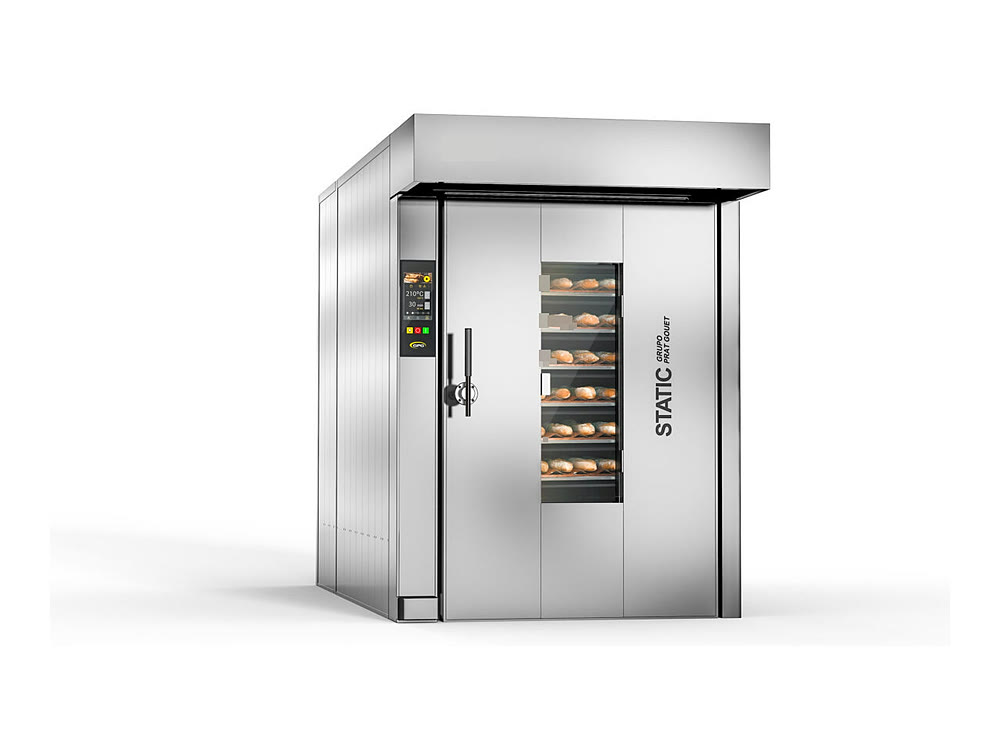
Radiant rack oven
It combines the convenience of a rack oven with radiant baking. One, two or three racks, 7 to 12 levels, and 5 to 20 square metres of baking surface.
- Models for 1, 2 or 3 racks
- From 7 to 12 levels
- 5 to 20 square metres of baking surface
- Refined and highly hydrated doughs, sandwich bread and pastry
- A dedicated boiler or a shared one
- Gas, diesel, electric or biomass
- The door opening direction and the boiler position can be chosen
- Racks
- 1, 2 or 3
- Levels
- 7 - 12
- Baking surface
- 5 - 20 m²
- Boiler
- individual or shared
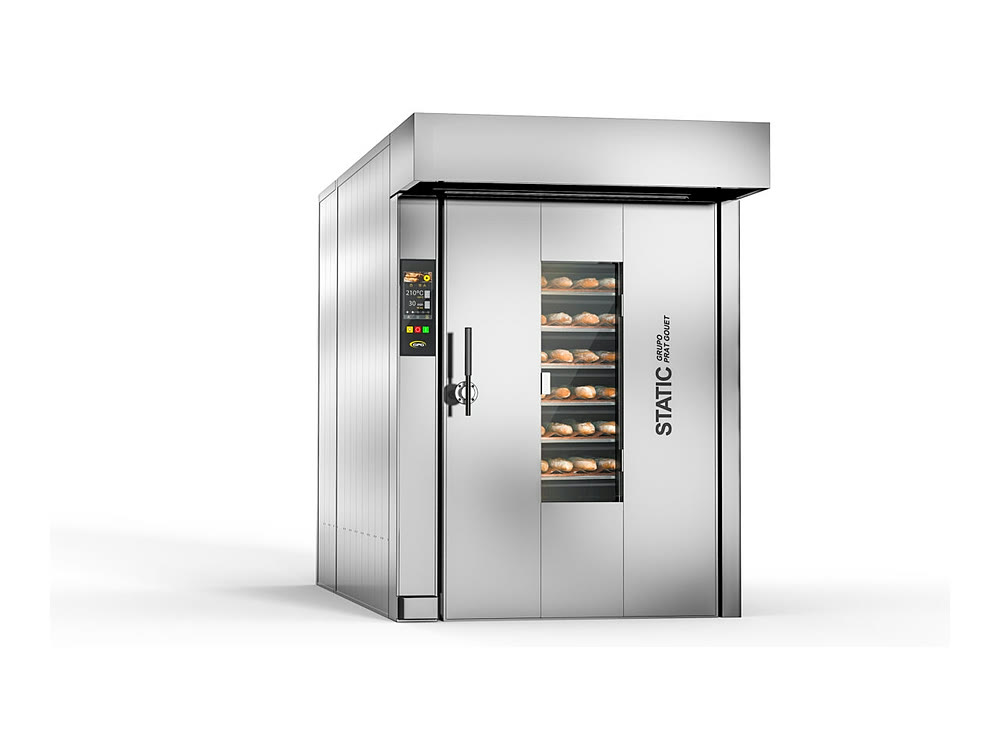
Refractory stone and an automatic loader
Refractory stone plates sit over the radiators, which gives the bake of a traditional stone oven. A full-load automatic loader fills and empties every level at once.
- Refractory stone plates over the radiators
- From 6 to 10 levels
- 8 to 75 square metres of baking surface
- A full-load automatic loader that loads and unloads in seconds
- One loader can serve up to four ovens
- An independent tilting door on every level
- A crisp crust and a firm base
- Artisanal bread and pastry specialities
- Controls that need no specialised operator
- Levels
- 6 - 10
- Baking surface
- 8 - 75 m²
- Floor
- refractory stone
- Loader
- full-load, up to 4 ovens
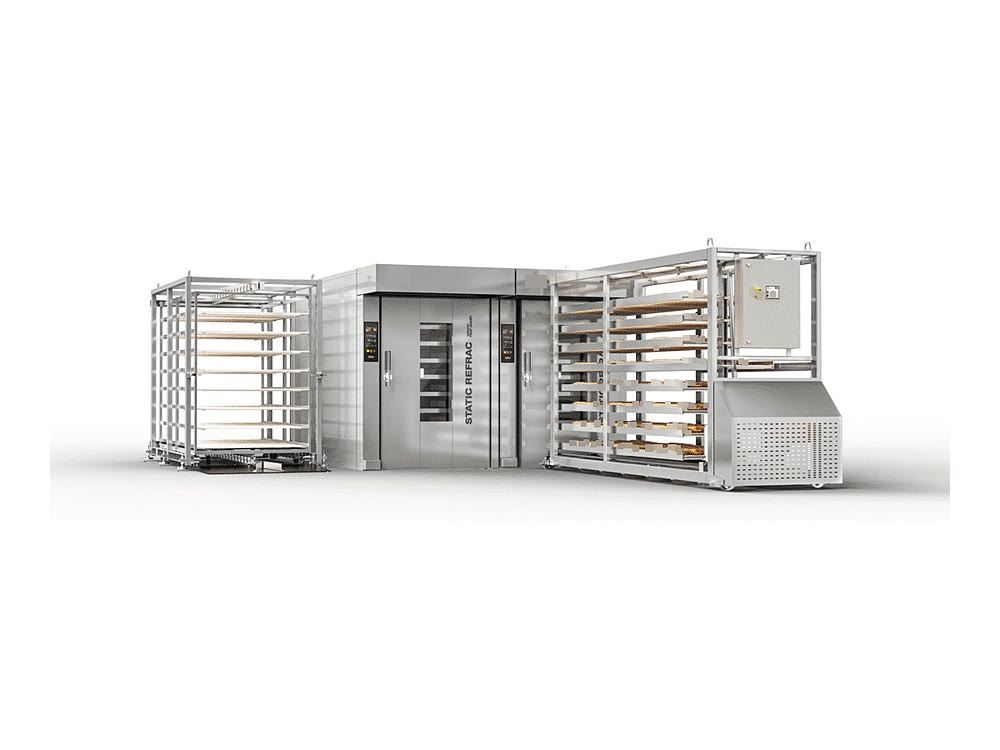
Deck oven on refractory stone
A five-deck body. All the chambers in one module run at a single temperature, and products in different formats bake at that temperature by adjusting the baking time and the spacing, as in traditional ovens.
- Five decks
- A refractory stone floor
- Several formats at a single temperature
- A powerful and consistent rise for doughs such as puff pastry
- None of the drying effect of hot air ovens
- For bakeries with varied production
- A programme of loaders and accessories that adapts to any workflow
- Decks
- 5
- Floor
- refractory stone
- Temperature
- one per module
- Products
- artisanal bread and pastry
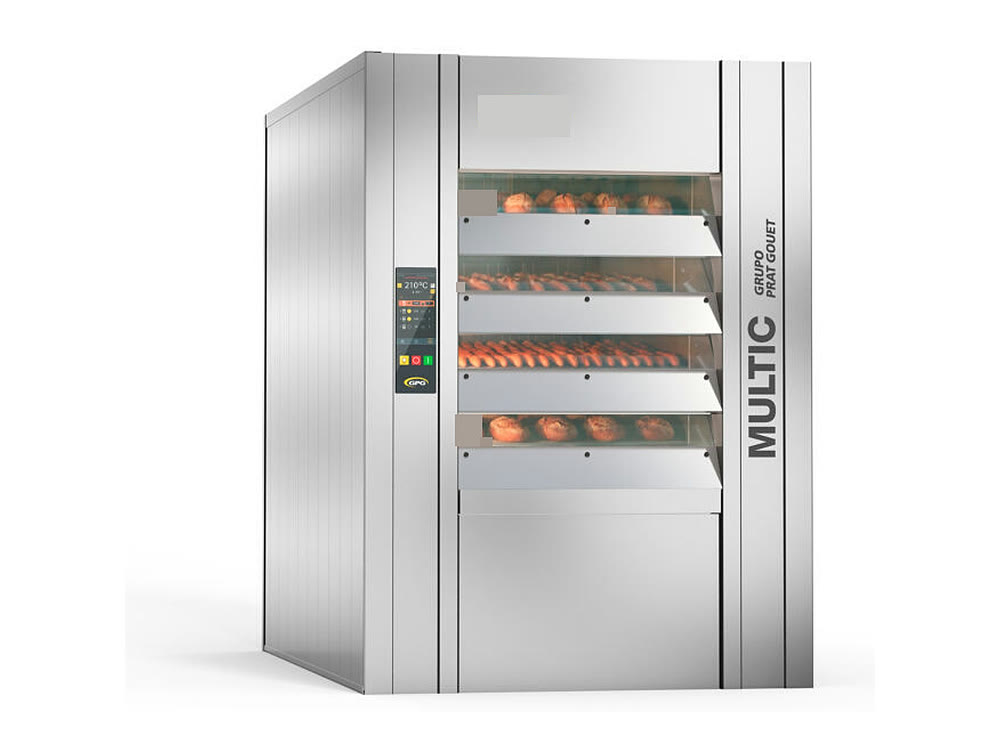
Two or more ovens on one boiler
Rack, stone and deck ovens are connected to a single central boiler. Because the boiler and other components are shared, both running cost and floor space go down.
- Two or more ovens on a single central boiler
- Rack, stone and deck bodies can be mixed in the same installation
- Up to 35 per cent savings in energy cost
- Each oven can run at a different temperature
- Different product types baked at the same time
- Higher output in less space than a tunnel oven
- Designed so that further ovens can be added later
- Automatic unloading from the station to a conveyor or to the operator
- Boiler
- central, shared
- Saving
- up to 35% on energy
- Temperature
- independent per oven
- Growth
- more ovens can be added
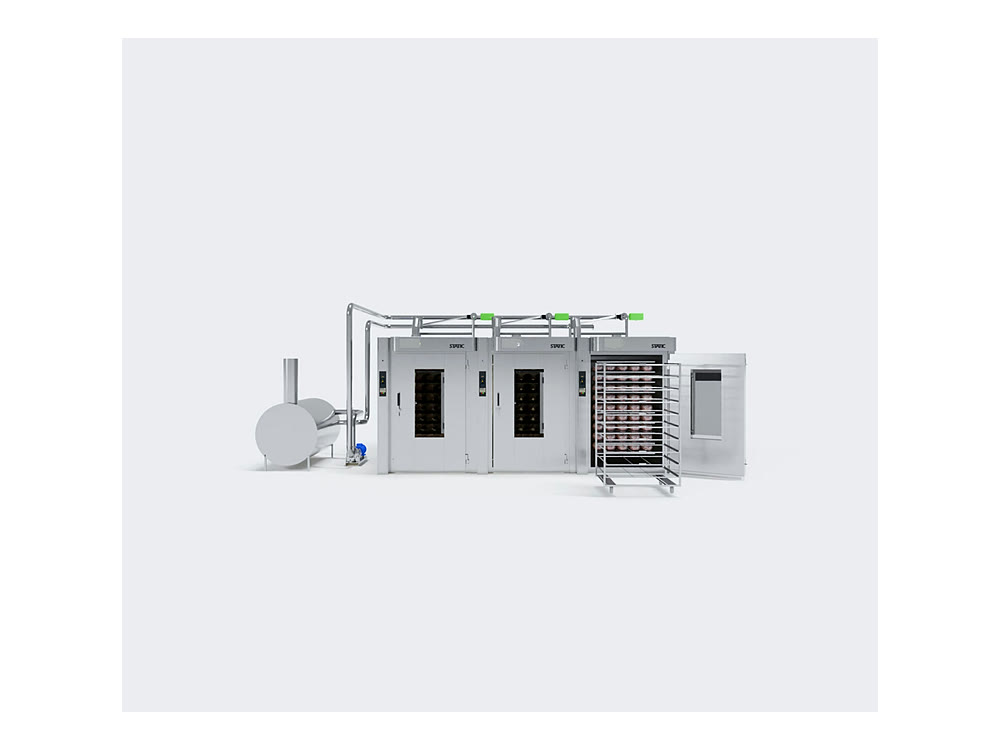
A pellet burning boiler
The same rack body with a biomass boiler. A fully automated pellet burner, a pellet storage tank and an automatic feeder to the burner. The dual-pass boiler is designed for pellets, with easy-clean registers.
- A fully automated pellet burner
- A pellet storage tank and an automatic feeder to the burner
- A dual-pass thermal oil boiler designed for pellets
- Easy-clean registers
- The same performance as gas or oil burners
- A clear saving in energy cost
- All the characteristics of radiant baking
- Fuel
- pellets
- Burner
- fully automated
- Boiler
- dual-pass, for pellets
- Feed
- automatic
Tell us your daily output, your product type and the space you can give the oven, and we will set the body, the number of levels and the boiler arrangement. Options include a hood extractor, turbo convection, a motorised flap, a multi-door arrangement and pastry trays.